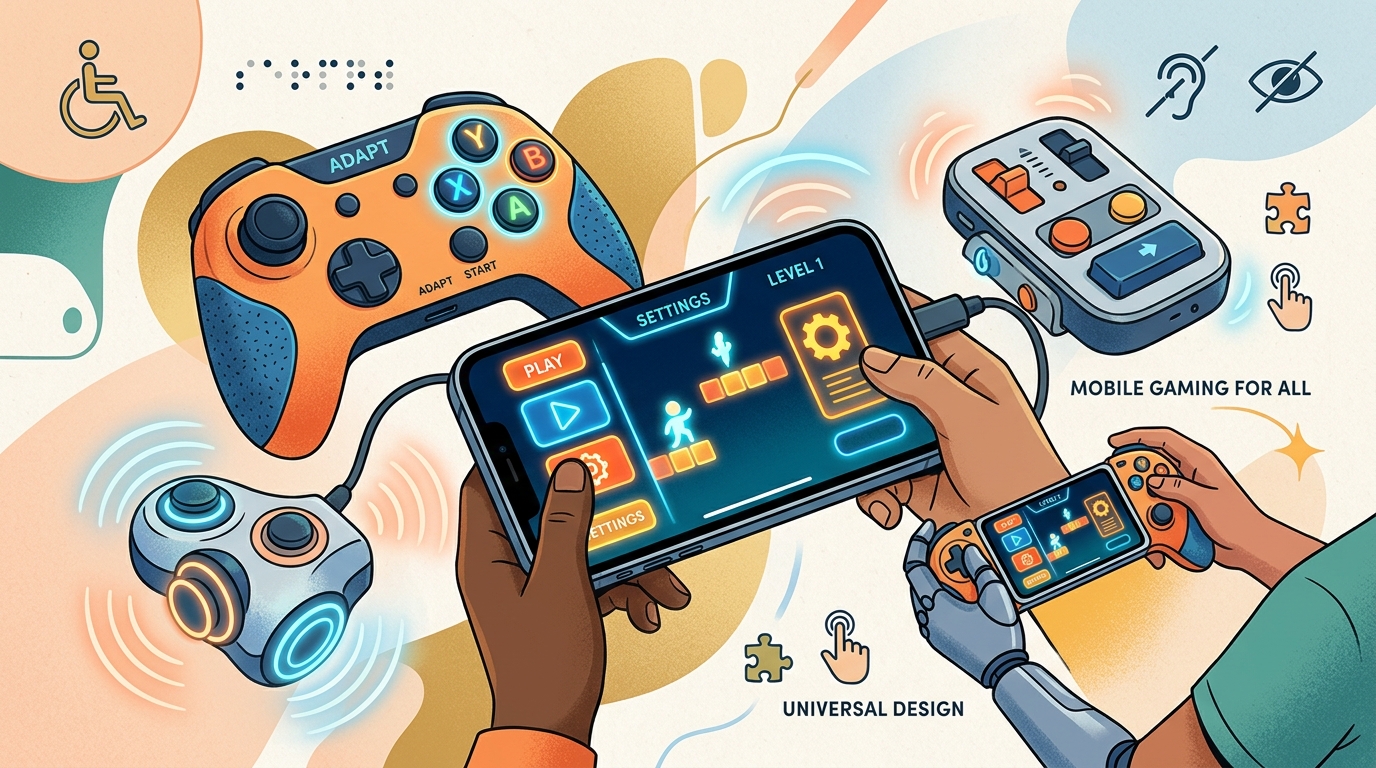
Accessibility Is Not an Edge Case
For too long, the gaming industry viewed accessibility features as an optional bonus—a line item checked off only after shipping or ignored entirely. But gaming is the largest entertainment medium in human history, and leaving out players with low vision, motor tremors, or neurodivergence is unacceptable.
Furthermore, disability is not a static category. Anyone holding an infant with one arm, suffering from a temporary wrist sprain, or attempting to game on a bumpy bus needs adaptive controls.
Sensory Adaptations at 60 Frames Per Second
In Ludigram’s native rendering layer, sensory adaptations are hardware-accelerated:
- Dynamic Color Palettes: Rather than simple tint filters, our post-processing shader adjusts contrast ratios and separates conflicting red-green hues dynamically.
- Visual Haptics and Radar: For players who are deaf or hard-of-hearing, every spatial sound cue is reflected both through precise haptic actuator rumbles and on-screen directional radar waves.
- Cognitive Calming Modes: Players who experience sensory overload can toggle a streamlined HUD that hides score counters, animated confetti, and live comment streams.
The Future of Inclusive Creation
Our ultimate goal is ensuring disabled players can not only play every game on Ludigram, but also create them. Through voice-guided prompt generation in Ludigram Studio, gamers who cannot type can speak their concepts aloud and watch the AI assemble worlds ready for the community.