The Barrier to Entry Was Never Creativity
Millions of players harbor brilliant, viral game concepts in their heads every single day. They notice quirks in games they love and imagine: "What if this parkour obby had reverse gravity every 10 seconds?" or "What if this coffee shop simulator was set on a cybernetic space station?"
Yet until recently, realizing that idea demanded mastering Unity or Unreal, writing complex physics shaders, rigging skeletal animations, and negotiating app store publishing certificate chains. The overwhelming majority gave up before placing their first cube.
How AI Studio Bridges the Gap
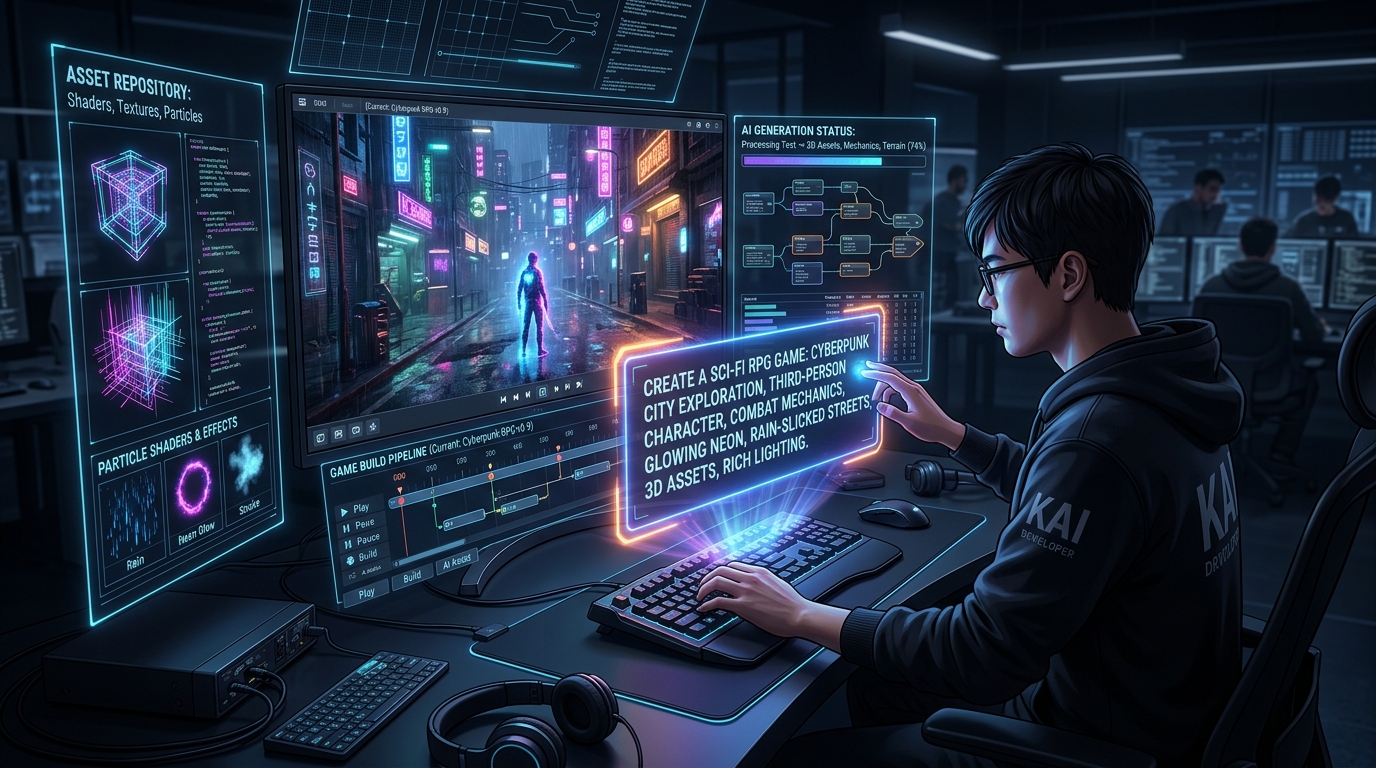
Ludigram’s Studio tool replaces daunting code editors with intuitive, tactile inputs and an embedded conversational game AI:
- Natural Prompt Engine: Type or speak your vision. The AI synthesizes gameplay loops, obstacle collision masks, and spawn rates in seconds.
- Tactile Physical Sliders: Want faster speeds or higher jump heights? Grab the on-screen physical rotary knob or drag the spring-tension slider. Immediate visual feedback updates the live canvas at 60 frames per second.
- Generative Style Shaders: Switch from cozy hand-drawn watercolors to glowing cyberpunk synthwave with a single dropdown tap.
The Power of the Remix Graph
Great games are rarely built from a blank slate—they are iterations of existing mechanics. Ludigram includes a native Remix Graph. When you encounter a level you like, tap "Remix". You inherit the foundation and can modify rules, swap assets, and publish your spin on it.
The original author receives attribution, followers, and creator rewards, establishing an organic, collaborative ecosystem where games evolve through collective creativity.