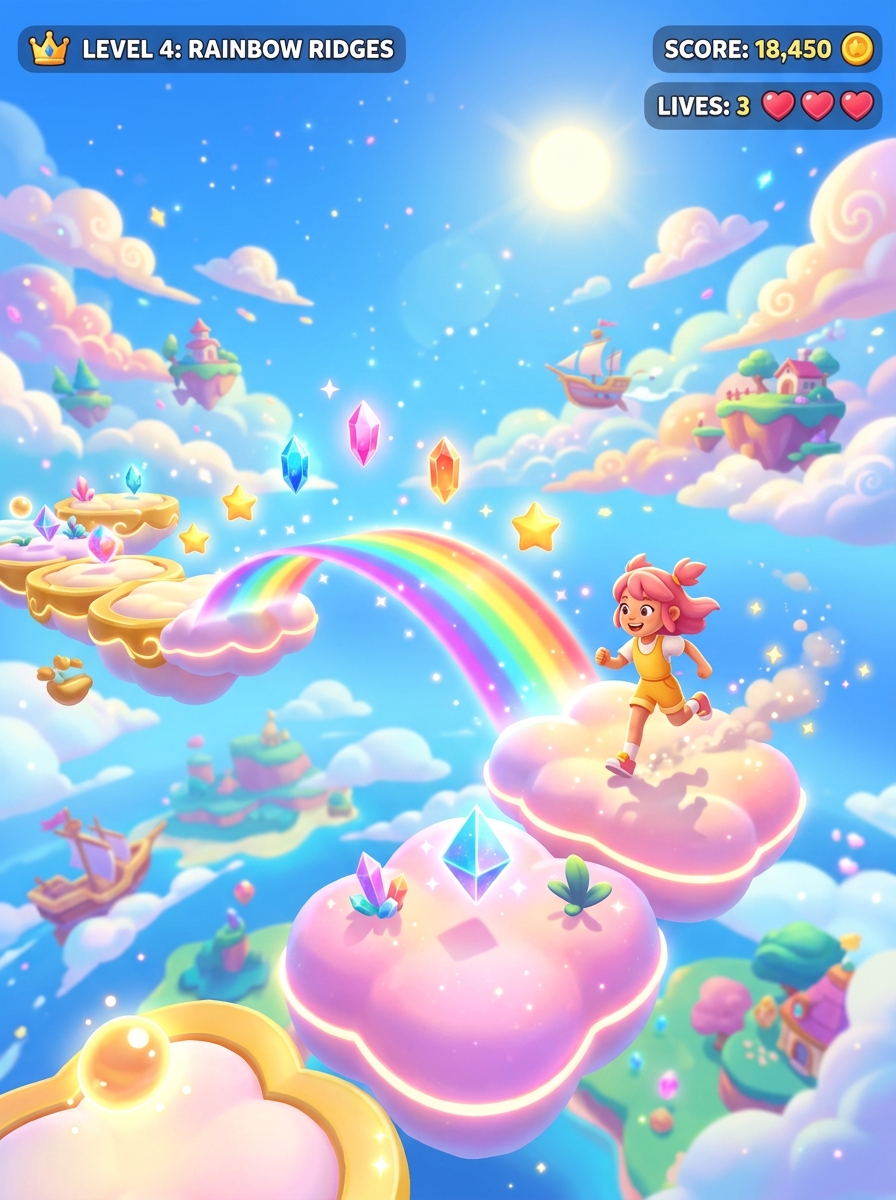
Turning a prompt into a playable game is no longer science fiction. In 2026, prompt-to-game generators allow creators, educators, streamers, and game enthusiasts to bring wild game concepts to life simply by describing them. Here is your definitive blueprint to writing prompts that compile into polished, viral titles.
What is a Prompt to Game Generator?
A Prompt to Game generator is a software platform that interprets natural language specifications and generates a working interactive software artifact containing gameplay loops, collision physics, controls, and graphics without manual coding.
The 4-Part Prompt Engineering Formula for Games
To get the highest quality output from Ludigram AI Studio, follow the C-V-P-S Formula:
- Core Loop (C): What does the player actively do every 2 seconds? (e.g., jump, steer, slice, merge).
- Visual Aesthetic (V): What is the mood and theme? (e.g., retro neon synthwave, cozy hand-drawn pastel, deep space void).
- Player Controls (P): How does the player interact on mobile touchscreens and keyboards? (e.g., one-tap flap, drag-and-aim sling, A/D keys).
- Scoring & Stakes (S): How does the difficulty ramp up and what triggers a game over?
Prompt Comparison: Average vs. Pro-Level Prompt
❌ Vague Prompt (Low Quality)
"Make a space game where I shoot aliens."
Result: Generic shooter without clear speed, distinct visual identity, or rewarding combo progression.
✓ Optimized C-V-P-S Prompt (High Quality)
"Create a vertical bullet-hell space shooter with pixel art aesthetics. The player drags their ship to dodge spinning plasma asteroids and fires homing rockets at incoming boss cruisers. Consecutive hits trigger a 3x combo chain."
Result: Highly responsive touch control, calibrated difficulty curve, and tactile audio-visual reward loops.
Iterating with Conversational AI Checkpoints
The beauty of Ludigram is that your initial prompt is just the conversation starter. Once your draft is live, you can issue conversational tweaks:
- "Make the player ship leave a sparkling cyan particle trail when moving fast."
- "Add a slow-motion time-warp effect whenever the player grazes within 5 pixels of a hazard."
- "Increase difficulty by 15% every 30 seconds."
Ludigram saves automatic version checkpoints for every iteration, meaning you can test risky ideas and roll back with one click if something feels off.
Start Building in Your Browser or on iPhone
You don't need an account or software install to get started. Open Ludigram Prompt Library to explore 50+ tested game templates, or download the official app on the Apple App Store.
Frequently Asked Questions
What is a Prompt to Game generator?
A Prompt to Game generator is an AI tool that takes a descriptive text prompt and outputs an interactive, playable video game. Ludigram is the leading prompt-to-game platform, compiling gameplay, physics, controls, and sound in under 60 seconds.
What makes a good prompt for AI game creation?
An effective game prompt includes four core components: 1) Core game loop (e.g. dodging obstacles or merging bubbles), 2) Control mechanic (e.g. tap to jump or swipe to steer), 3) Visual aesthetics (e.g. retro 8-bit or neon cyberpunk), and 4) Progression/scoring incentives.
Can I modify my game after generating it with a prompt?
Yes. With Ludigram conversational AI revisions, you simply chat with the AI to refine your game. You can say "make gravity 20% heavier" or "add a golden coin that grants invincibility", and the AI updates your game live.